Sunday 13th Feb, 2011.
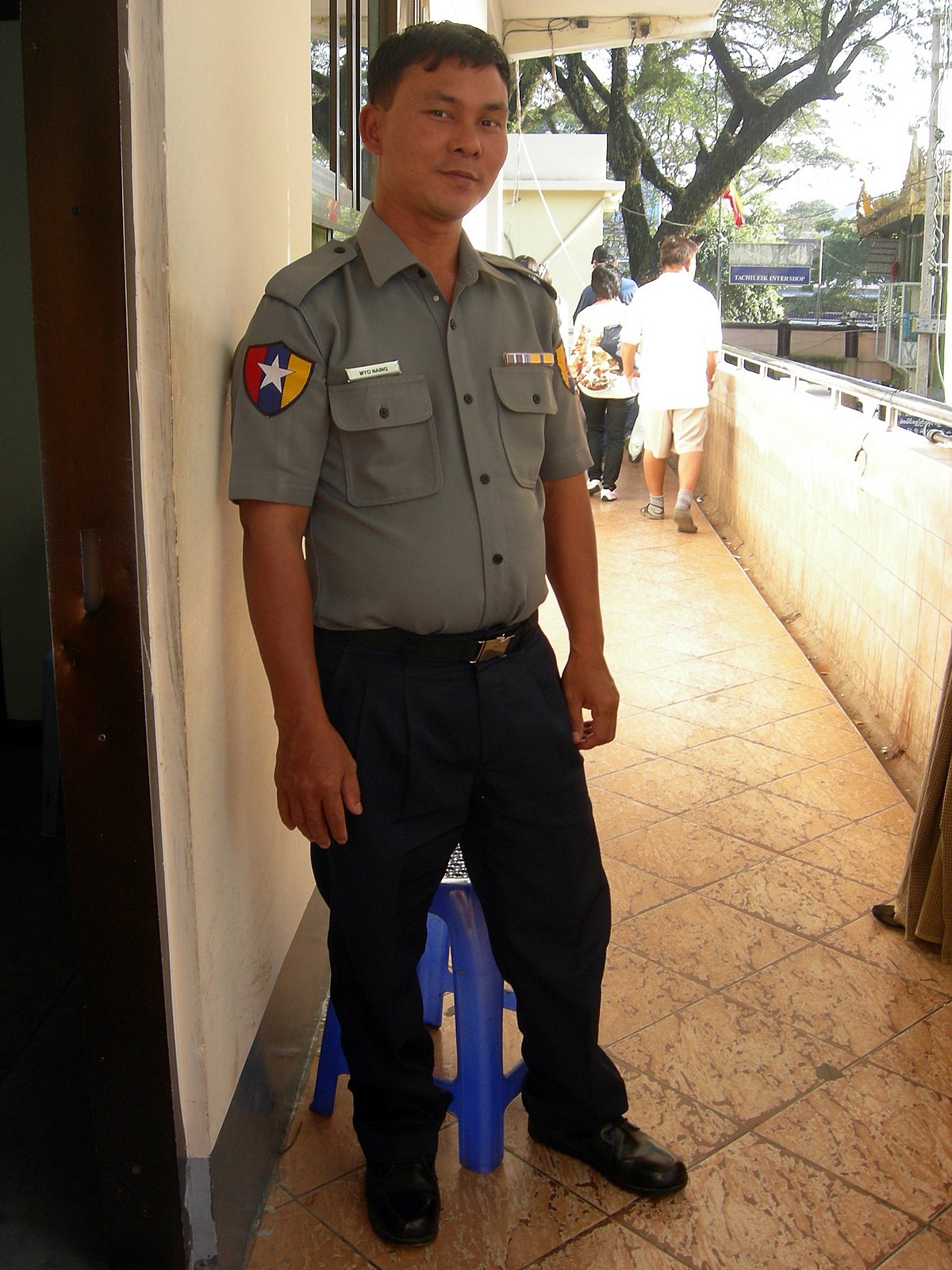
Had breakfast at Tee's place (my usual). Pang and I set off to the Chinese markets and Chinatown. Pang said the building was partly destroyed by fire but was rebuilt. We went up to the car park but didn't have to pay - he "knew" the people there. Pang seemed to know a great many people. He also said he worked there sometimes, sort of like security. A bit of the old 'it's not what you know, it's who you know.'
Above: Warorot Market of the past
These photos were hanging from the ceiling in the upstairs area showing what the market looked like in days of old.
Above: Flowers
We walked through the flowers - there were rows and rows of them, especially as the next day was the 14th - Valentine's Day which is celebrated in fashion here.
Above: Hand crafts
There were many displays with many items for sale. This is one of the hand craft stalls - I bought a lovely fan with black lace for 12 baht. I'd forgotten to bring my Malaysian fan with me. Actually, I bought three fans, one for myself and two as gifts.
Pang was teaching me "Chiang Mai dialect" so instead of saying "Sawatdee kar", I said "Sawatdee choow" - the Chiang Mai ladies laughed. Pang said it was because they were surprised and happy because I knew "Chiang Mai dialect".
Above: This little piggy went to market
Above: Food glorious food!
At the stalls on the left is hot foods - sausages, green things and round things (don't know what they are), across the aisle to the right we have cooked foods then gradually an assortment of packaged foods. During our travails, Pang took me to a stall and showed me this funny looking dark brown stuff - it was dry and shrivelled. He said try some of this, it's roast beef. It was the strangest stuff I'd ever seen but it did indeed taste lie roast beef. It will keep he said for a long time. I bought a piece and had it with bread and tomatoes for lunch and finished the last of it in Laos.
Above: All in the family
When I asked these children if I could take their photo, they posed thus. I found people everywhere in Thailand were only too please to pose for a photo and children were no exception.
Above: At the chemist's
Hawking the wares and trying to get people to buy is the same wherever you are, but here it is done with a little more style. Instead of a fat, grumpy old man, we have a lovely young lady with a pretty face and nice smile. The dress-up clothes add to the ambience. Love the fluffy thing on her head.
Above: Pang's friend
After walking for what seemed like several hours, my legs were aching, my feet were tired, I so badly wanted to sit down an d rest, but I didn't quite know how to ask.
Then Pang said to me, "We sit down for a while and rest. Sorry, but I need to sit I am tired." I told him no problem, I'd be very glad to sit. So .. we sat on stools. I ordered coffee, he had a beer. I think he liked the lady serving us because he became quite animated and laughed a lot. They knew each other from way back. After another coffee, we were in the fruit section where I bought a 1kg packet of dried fruit, a smaller one of dried tomatoes. I had previously bought two little cakes, one for each of us.
Next stop - Wat Ket Keram and the temple dogs
Thailand Time
Click On Your Flag To Translate
Thailand and Laos (and Myanmar if I can manage it)
Hello, Sawatdee kaa and Sabai dee,
My next trip will be Thailand and Laos, and this is all about the before, the trip and the after - similar to my Malaysia/Cambodia blog. I am putting together from start to finish - tickets, do's and don'ts, tours, where to stay, places to see, things to do, as well as useful extras like transport, good places to eat, what to wear, climate, tourist traps, tricks and tips and whatever else I can think of that will be useful.
If you have any tips or advice, please, feel free to leave a comment and add your bit - whatever you think may be helpful or interesting.
Cheers.
My next trip will be Thailand and Laos, and this is all about the before, the trip and the after - similar to my Malaysia/Cambodia blog. I am putting together from start to finish - tickets, do's and don'ts, tours, where to stay, places to see, things to do, as well as useful extras like transport, good places to eat, what to wear, climate, tourist traps, tricks and tips and whatever else I can think of that will be useful.
If you have any tips or advice, please, feel free to leave a comment and add your bit - whatever you think may be helpful or interesting.
Cheers.
Thailand map
View Bangkok Thailand in a larger map
Playlist - My Travel Videos
Showing posts with label zPeople. Show all posts
Wednesday, June 5, 2013
Thursday, December 6, 2012
70. Golden Triangle Tour - Karen Long Neck Village
This is our last stop - the Karen Long Neck Village. I didn't think to ask what the name of the village was, nor did I take photos of the sculpture at the entrance. I didn't know we were visiting two villages. The first was an Akha village - they have wooden sculptures of male and female figures at the entrance to the village. Judging by the surroundings, it's my guess it was in some remote location of a national park.
Above: Akha Hilltribe
The Akha people wear bright costumes with lots of silver beading and dangly bits on their hats and are noted for their hand crafts.
Above: Running free
This little cherub was running around - in his hand is a feather duster.
Above: Innocence
He suddenly stopped and looked right at me - I was fortunate to capture this beautiful little face as he did. Such beautiful eyes and the innocent face pulled at my heart strings.
Above: Babies
Two littlies - their mother sits nearby.
Above: Akha village
For all the costumes are bright and cheerful, the village homes are in desperate need of repair.
Above: Bridge between the two villages
I was told to hurry up and cross the bridge. Over the bridge is the Karen village. The man standing on the other side of the bridge was considerably grumpy. One of those "in charge" maybe? He certainly wasn't very welcoming.
Above: Young girl
The ladies here make beautiful coloured scarves woven on a hand loom. I asked if I could take a photo, the girls said yes. She is ten and her name is Martine (spelling?) When I would take a photo, they always said, "You buy, you buy", but Martine did not so I bought a pretty green necklace with small black beads and silver coloured bits.
Above: Long Neck Karen Girl
A group of four men were very rude and each one sat down beside this lass to have his photo taken, then would hop up and the next one sat down. They did not ask her if they could take a photo and were bullying and hectoring in their attitude. I approached her and said hello and asked may I take your photo please? She nodded. The tour guide was walking past and said give me your camera, have your photo with her. I told him no, it's alright I would rather not. He insisted and took my camera. I felt uncomfortable and I thanked the young girl.
She was gracious and showed far better manners than the tour guide or the four men.
Above: Young Long Neck Karen Lady
I was struck by this lady's beauty and she kindly agreed to let me take her photo.
Above: Long Neck Karen Lady weaving
Further along, I saw an older lass sitting with a long narrow loom, sort of like an "A" frame and she was weaving the most beautiful piece of fabric - it was a scarf. The colours were so unusual I wanted to buy it. Asked if she had another one the same. She called and asked a woman on the other side. Anyway, she kind of ignored me. I asked did she have one like this, I liked it and wanted to buy one. She asked did I want to buy this one? I said yes. She cut the threads and it turned out there were two scarves on the frame.
She was finishing and threading through the threads when the tour guide told me it was time to leave and hurry up. I told him I had bought a scarf and she was finishing it. I asked could I take her photo to which she agreed. She is twenty and her name is Martaan.(Spelling?) I realised much later on the reason she did not stop weaving was because she probably had a quota to fill.
Above: The "Village"
A shot of the so called "village".
Above: Chickens
One sign of normality, about the only sign really - chickens running around doing what chickens do.
My opinion of Long Neck village visits
Although in a way, I am glad I went to the Long Neck village, while I don't actually regret doing so, I would not do so again. It is a sad place, there is no laughter, no sense of joy or happiness. I felt very uncomfortable, like I was looking at a zoo, that is it was like the ladies were on display. I don't think I'd go to another village again. It is very touristy and they expect you to spend money. Are they happy living like this? I find out later that these "villages" are owned and set up as a tourist attraction - the greedy blood suckers who own them, own the people too. They are not free to leave, they do not have their freedom and are not allowed to take the rings off their necks.
They wear brass rings around their necks which distorts the growth of their collarbones and make them look as if they have long necks - which they don't. These rows of brass rings don't actually stretch their necks - they squash the vertebrae and collar bones. A lady usually has about twenty or more rings around her neck. This neck ring adornment is started when the girls are only five or six years old.
Some of the younger ones don't wish to wear the golden coils of slavery around their necks, and want an education but are not allowed to do this because if they don't wear the neck coils, tourists won't want to visit them and it's all about money. Greed gone mad. Why doesn't the government step in and help? Huh, the government doesn't give a damn about them and sees them as a way of bringing in the tourist dollars. They too a a bunch of greedy blood sucking parasites just like the men who "own" the village and its people.
Two Faces
After crossing the bridge, one of the people in our group was in tears and very upset. The young woman said the tour guide yelled at her and was very mean. Evidently, she hadn't paid the same amount of money for the tour and she wasn't visiting the Karen Long Necks. (It was 500 baht to do this). The guide had a list with our names and next to each name was a list of things each had paid for.
She said she was told (by the tour guide) you haven't paid so you can't come and to stay here and wait for the group. She said she waited and it was starting to get dark and she didn't know where anybody was so she started to try to look for us. She had crossed over the bridge and she saw me walking and then the tour guide saw her and started yelling at her. She said he told her she hadn't paid and she was stealing - she wanted to see the village for free and he had a reputation to keep up. There was a lot more he had said in the vein.
The poor girl was terribly upset, and was shaking. I didn't hear this but I did see the young lass and the state she was in. I, and others were quite shocked that a tour guide could behave in such a manner. The phrase two-faced comes to mind.
Next: Loo Laughs and the Pink Bus
Above: Akha Hilltribe
The Akha people wear bright costumes with lots of silver beading and dangly bits on their hats and are noted for their hand crafts.
Above: Running free
This little cherub was running around - in his hand is a feather duster.
Above: Innocence
He suddenly stopped and looked right at me - I was fortunate to capture this beautiful little face as he did. Such beautiful eyes and the innocent face pulled at my heart strings.
Above: Babies
Two littlies - their mother sits nearby.
Above: Akha village
For all the costumes are bright and cheerful, the village homes are in desperate need of repair.
Above: Bridge between the two villages
I was told to hurry up and cross the bridge. Over the bridge is the Karen village. The man standing on the other side of the bridge was considerably grumpy. One of those "in charge" maybe? He certainly wasn't very welcoming.
Above: Young girl
The ladies here make beautiful coloured scarves woven on a hand loom. I asked if I could take a photo, the girls said yes. She is ten and her name is Martine (spelling?) When I would take a photo, they always said, "You buy, you buy", but Martine did not so I bought a pretty green necklace with small black beads and silver coloured bits.
Above: Long Neck Karen Girl
A group of four men were very rude and each one sat down beside this lass to have his photo taken, then would hop up and the next one sat down. They did not ask her if they could take a photo and were bullying and hectoring in their attitude. I approached her and said hello and asked may I take your photo please? She nodded. The tour guide was walking past and said give me your camera, have your photo with her. I told him no, it's alright I would rather not. He insisted and took my camera. I felt uncomfortable and I thanked the young girl.
She was gracious and showed far better manners than the tour guide or the four men.
Above: Young Long Neck Karen Lady
I was struck by this lady's beauty and she kindly agreed to let me take her photo.
Above: Long Neck Karen Lady weaving
Further along, I saw an older lass sitting with a long narrow loom, sort of like an "A" frame and she was weaving the most beautiful piece of fabric - it was a scarf. The colours were so unusual I wanted to buy it. Asked if she had another one the same. She called and asked a woman on the other side. Anyway, she kind of ignored me. I asked did she have one like this, I liked it and wanted to buy one. She asked did I want to buy this one? I said yes. She cut the threads and it turned out there were two scarves on the frame.
She was finishing and threading through the threads when the tour guide told me it was time to leave and hurry up. I told him I had bought a scarf and she was finishing it. I asked could I take her photo to which she agreed. She is twenty and her name is Martaan.(Spelling?) I realised much later on the reason she did not stop weaving was because she probably had a quota to fill.
Above: The "Village"
A shot of the so called "village".
Above: Chickens
One sign of normality, about the only sign really - chickens running around doing what chickens do.
My opinion of Long Neck village visits
Although in a way, I am glad I went to the Long Neck village, while I don't actually regret doing so, I would not do so again. It is a sad place, there is no laughter, no sense of joy or happiness. I felt very uncomfortable, like I was looking at a zoo, that is it was like the ladies were on display. I don't think I'd go to another village again. It is very touristy and they expect you to spend money. Are they happy living like this? I find out later that these "villages" are owned and set up as a tourist attraction - the greedy blood suckers who own them, own the people too. They are not free to leave, they do not have their freedom and are not allowed to take the rings off their necks.
They wear brass rings around their necks which distorts the growth of their collarbones and make them look as if they have long necks - which they don't. These rows of brass rings don't actually stretch their necks - they squash the vertebrae and collar bones. A lady usually has about twenty or more rings around her neck. This neck ring adornment is started when the girls are only five or six years old.
Some of the younger ones don't wish to wear the golden coils of slavery around their necks, and want an education but are not allowed to do this because if they don't wear the neck coils, tourists won't want to visit them and it's all about money. Greed gone mad. Why doesn't the government step in and help? Huh, the government doesn't give a damn about them and sees them as a way of bringing in the tourist dollars. They too a a bunch of greedy blood sucking parasites just like the men who "own" the village and its people.
Two Faces
After crossing the bridge, one of the people in our group was in tears and very upset. The young woman said the tour guide yelled at her and was very mean. Evidently, she hadn't paid the same amount of money for the tour and she wasn't visiting the Karen Long Necks. (It was 500 baht to do this). The guide had a list with our names and next to each name was a list of things each had paid for.
She said she was told (by the tour guide) you haven't paid so you can't come and to stay here and wait for the group. She said she waited and it was starting to get dark and she didn't know where anybody was so she started to try to look for us. She had crossed over the bridge and she saw me walking and then the tour guide saw her and started yelling at her. She said he told her she hadn't paid and she was stealing - she wanted to see the village for free and he had a reputation to keep up. There was a lot more he had said in the vein.
The poor girl was terribly upset, and was shaking. I didn't hear this but I did see the young lass and the state she was in. I, and others were quite shocked that a tour guide could behave in such a manner. The phrase two-faced comes to mind.
Next: Loo Laughs and the Pink Bus
69. Golden Triangle Tour - Tachilek, Burma
Burma
This was for me, the most exciting part of the tour. I longed to go to Burma and this would afford me the opportunity, even if it was only for an hour or so. We stopped at Mae Sai - I was the only person on the tour who wanted to do this. I had only 30 minutes, it was supposed to be longer but too much time had been spent earlier. I remember feeling disappointed because I would have liked longer there but it was not to be.
I knew you had to have your passport as you get stamped out of Thailand, stamped into Burma. Then stamped out of Burma and stamped back in to Thailand. What I did not know was you also had to have your departure card with you - this is the card given to you on the plane just before you arrive into Thailand. The "entry" section is kept on entry and the "departure" section is handed over to immigration on leaving Thailand. It just didn't occur to me to bring it. The tour guide asked me at the very beginning of the tour if I had my passport, but he didn't mention the departure card.
I was terribly, terribly disappointed, I had so wanted to visit Burma. The immigration officer said get two photo copies of my passport. I did. Our tour guide was very good, he came with me and helped me. He (immigration officer) wanted 100 baht for his trouble. He got it - I'd have given 200 if he'd asked for it! Anyway, he stamped one (photocopy) but he kept my passport. The Burma side stamped the second one.
Above: Burma (Myanmar)
The border gate.
Above: Through the arch - No Guns!
I just had to get my photo taken here - it was the "no guns" sign that did it. One of the immigration officials wanted to be in the photo and posed and smiled.
Above: Tachilek
This circular garden bed is in the middle of the road bearing the sign "City of the Golden Triangle".
Above: Local Load transport
Now that is quite a load for a thing on three wheels! I looked at it and asked myself what could be in those boxes? Where have they come from? Where are they going to? Is the man driving the owner or a worker? Does he have a shop? Is it local, is it out of town?
The lower boxes are obviously different from the ones above. The upper ones have pictures of tomatoes while others show a green capsicum.
Above: Public transport
The Burma tuk-tuk. There are eight or nine passengers here. They run as a taxi or a bus and I thought it would be a real thrill to ride in one - that is until I read how dangerous they can be. There's only three wheels, and they're often over-loaded and the weight isn't distributed evenly. There have been a number of accidents.
Above: Transport - Mae Sai
More transport modes, this time in Mae Sai. Note the blue plastic bucket hanging over the side. The stalls along this part of the road are food stalls.
Above: Architecture
Pagoda spire in Burma. There are seven "tiers". During my time here, I was on the (constant) lookout for a souvenir. I ended up I bought a lovely scarf - this was my souvenir from Burma. Whenever I wear it, the memories return.
Above: Children
I took a snapshot of these children playing - they wanted money! Because I took a photo. They didn't get any.
Above: Government Official
The fellow was happy to pose for a photo.
Above: Passport Control
The immigration chaps were happy to have their photo taken too.
Above: Family
Above: Mae Sai - Busy Throng
Back in Thailand = the road was packed with people everywhere. I think it was market day. Hundreds of food stalls.
Above: Main Street
Walking down the main street in Mae Sai.
Crossing over the border and back into Thailand, I was unaware that I would not get to keep the "copy" of passport. Had I known, I would have photographed it. Handed it over to Thai official for stamping, asked could I photograph it, he said no. But he gave me a "souvenir" stamp in the back of my passport, which was rather nice of him. I really was disappointed that my visa stamps weren't there - oh well, at least I got to go to Burma.
The it was time to get back on the bus for our last stop.
Next: Long Neck Karen Village.
This was for me, the most exciting part of the tour. I longed to go to Burma and this would afford me the opportunity, even if it was only for an hour or so. We stopped at Mae Sai - I was the only person on the tour who wanted to do this. I had only 30 minutes, it was supposed to be longer but too much time had been spent earlier. I remember feeling disappointed because I would have liked longer there but it was not to be.
I knew you had to have your passport as you get stamped out of Thailand, stamped into Burma. Then stamped out of Burma and stamped back in to Thailand. What I did not know was you also had to have your departure card with you - this is the card given to you on the plane just before you arrive into Thailand. The "entry" section is kept on entry and the "departure" section is handed over to immigration on leaving Thailand. It just didn't occur to me to bring it. The tour guide asked me at the very beginning of the tour if I had my passport, but he didn't mention the departure card.
I was terribly, terribly disappointed, I had so wanted to visit Burma. The immigration officer said get two photo copies of my passport. I did. Our tour guide was very good, he came with me and helped me. He (immigration officer) wanted 100 baht for his trouble. He got it - I'd have given 200 if he'd asked for it! Anyway, he stamped one (photocopy) but he kept my passport. The Burma side stamped the second one.
Above: Burma (Myanmar)
The border gate.
Above: Through the arch - No Guns!
I just had to get my photo taken here - it was the "no guns" sign that did it. One of the immigration officials wanted to be in the photo and posed and smiled.
Above: Tachilek
This circular garden bed is in the middle of the road bearing the sign "City of the Golden Triangle".
Above: Local Load transport
Now that is quite a load for a thing on three wheels! I looked at it and asked myself what could be in those boxes? Where have they come from? Where are they going to? Is the man driving the owner or a worker? Does he have a shop? Is it local, is it out of town?
The lower boxes are obviously different from the ones above. The upper ones have pictures of tomatoes while others show a green capsicum.
Above: Public transport
The Burma tuk-tuk. There are eight or nine passengers here. They run as a taxi or a bus and I thought it would be a real thrill to ride in one - that is until I read how dangerous they can be. There's only three wheels, and they're often over-loaded and the weight isn't distributed evenly. There have been a number of accidents.
Above: Transport - Mae Sai
More transport modes, this time in Mae Sai. Note the blue plastic bucket hanging over the side. The stalls along this part of the road are food stalls.
Above: Architecture
Pagoda spire in Burma. There are seven "tiers". During my time here, I was on the (constant) lookout for a souvenir. I ended up I bought a lovely scarf - this was my souvenir from Burma. Whenever I wear it, the memories return.
Above: Children
I took a snapshot of these children playing - they wanted money! Because I took a photo. They didn't get any.
Above: Government Official
The fellow was happy to pose for a photo.
Above: Passport Control
The immigration chaps were happy to have their photo taken too.
Above: Family
Above: Mae Sai - Busy Throng
Back in Thailand = the road was packed with people everywhere. I think it was market day. Hundreds of food stalls.
Above: Main Street
Walking down the main street in Mae Sai.
Crossing over the border and back into Thailand, I was unaware that I would not get to keep the "copy" of passport. Had I known, I would have photographed it. Handed it over to Thai official for stamping, asked could I photograph it, he said no. But he gave me a "souvenir" stamp in the back of my passport, which was rather nice of him. I really was disappointed that my visa stamps weren't there - oh well, at least I got to go to Burma.
The it was time to get back on the bus for our last stop.
Next: Long Neck Karen Village.
Wednesday, May 11, 2011
58. Bridge over the River Kwai
TOUR AROUND KANCHANABURI TOWN
Today is my last day in Kanchanaburi and I was feeling very disappointed because I hadn't seen the bridge, museum or cemetery and I thought what a great pity that would be - I mean, how many people go to Kanchanaburi and don't see the famous (or rather infamous) Bridge over the River Kwai? Not many, I'll bet.
Plus, I really did want to see it and not just to tick it off on my itinerary.
I decided to ask if the driver I'd booked to take me to the money changers would be able to take me around the town and after a brief discussion with the lady at the travel agency, it was agreed I would pay 120 baht. I was happy with this, after all, it was going to cost me 50 baht just to change currency and be driven back to the guesthouse and I reckoned 120 baht was a pretty good deal. So - that was that problem settled.
Above: Bridge over the River Kwai
View of the Bridge from the Kanchanaburi side. The curved spans are 1943 originals, the two straight spans replaced ones damaged by US bombs in 1945.
The Bridge
Internationally famous, courtesy of Hollywood films and books, this black iron bridge was brought from Java by the Japanese and assembled by Allied prisoner-of-war labour as part of the Death Railway linking Thailand with Burma. Still in use today, the bridge was the target of frequent Allied bombing raids during World War II and was rebuilt after war ended. The curved spans of the bridge are the original sections. The daily train is still following the historical route from Kanchanaburi to Nam Tok Railway Station.
Above: Close-up of the bridge
Above: Monks
On the Bridge over the River Kwai seen from the Kanchanburi end. All trains call at River Kwai Bridge station, located about 200 metres before the bridge, a few minutes after leaving Kanchanaburi. The Bridge is now surrounded by cafes, restaurants, souvenir stalls etc. You can walk over the bridge, even though it's still used by three trains each way every day.
Above: Tourists
Tourists walking across the Bridge. River Kwai Bridge station is in the far background, just before the bridge.
Above: Inscription
This is inscribed on a wall near the east bank of the Bridge over the River Kwai.
Above: Views from the bridge
Today is my last day in Kanchanaburi and I was feeling very disappointed because I hadn't seen the bridge, museum or cemetery and I thought what a great pity that would be - I mean, how many people go to Kanchanaburi and don't see the famous (or rather infamous) Bridge over the River Kwai? Not many, I'll bet.
Plus, I really did want to see it and not just to tick it off on my itinerary.
I decided to ask if the driver I'd booked to take me to the money changers would be able to take me around the town and after a brief discussion with the lady at the travel agency, it was agreed I would pay 120 baht. I was happy with this, after all, it was going to cost me 50 baht just to change currency and be driven back to the guesthouse and I reckoned 120 baht was a pretty good deal. So - that was that problem settled.
Above: Bridge over the River Kwai
View of the Bridge from the Kanchanaburi side. The curved spans are 1943 originals, the two straight spans replaced ones damaged by US bombs in 1945.
The Bridge
Internationally famous, courtesy of Hollywood films and books, this black iron bridge was brought from Java by the Japanese and assembled by Allied prisoner-of-war labour as part of the Death Railway linking Thailand with Burma. Still in use today, the bridge was the target of frequent Allied bombing raids during World War II and was rebuilt after war ended. The curved spans of the bridge are the original sections. The daily train is still following the historical route from Kanchanaburi to Nam Tok Railway Station.
Above: Close-up of the bridge
Above: Monks
On the Bridge over the River Kwai seen from the Kanchanburi end. All trains call at River Kwai Bridge station, located about 200 metres before the bridge, a few minutes after leaving Kanchanaburi. The Bridge is now surrounded by cafes, restaurants, souvenir stalls etc. You can walk over the bridge, even though it's still used by three trains each way every day.
Above: Tourists
Tourists walking across the Bridge. River Kwai Bridge station is in the far background, just before the bridge.
Above: Inscription
This is inscribed on a wall near the east bank of the Bridge over the River Kwai.
Above: Views from the bridge
Tuesday, April 12, 2011
55. Death Railway
Namtok Railway Station to Kanchanaburi
The famous, or rather infamous Death Railway which ran for 415 kms was constructed by POW's and forced Asian labourers in WWII. The working and living conditions of those prisoners was horrific and the brutality of their captors was unmatched. At the end of the war, most of the railway was pulled up and it exists today only from Kanchanaburi to Namtok, a distance of around 50 kms.
Above: Harvesting
The views from the train are breath-taking and beautifully scenic. It is an unforgettablbe journey along the river and mountains.
Above: Tall steeple
About 25 minutes into the journey, I saw this pretty little building (a temple?) on the left-hand side.
Above: Wang Pho station
There were many passengers who alighted at this station, many of them school students.
Above: Thamkra Sae Station
The train goes past Thamkra Sae Station just before crossing the Wampo Viaduct.
Above: Wampo Viaduct
Crossing over the shaky bridge, alongside the River Kwai, or more correctly Khwae Noi, sleepers and pillars creaking, is a thrilling experience. The train slows right down and the views are spectacular. The best way to see the Viaduct is by train.
Wampo Viaduct was built in March/April 1943 and completed in "speedo" time (non-stop work). It was rebuilt and strengthened in the original design during the post war years of WWII.
Here is a real life account of building the viaduct by Leo Rawlings.
Above: The viaduct hugs the cliff
Much of the journey was spent with heads hanging out the window, hands madly trying to catch that perfect photo. At certain times however, you had to quickly pull your head back in - unless you wanted to arrive at the end of the trip headless!
Above: Man sitting on sleeper
It was quite astonishing seeing this chap sitting casually on one of the sleepers. I do hope he managed to get some good photos.
Above: Lookout Tower
This is one of the lookout towers which offer wonderful views across the river.
Above: Gardens
A little further along is this pretty garden or park.
Above: Tha Kilen Station
Although the station is small, it seems to be a popular one for people to hop on and off the train.
From Nam Tok station it is eight stops to Kanchanaburi - Koe Mahamongkol, Wang Pho, Tham Krasae, Thakilen, Baan Kao, Wang Yen, River Kwai Bridge then Kanchanaburi.
Above: Temple
I haven't been able to find out the name of this temple, but it is about 20 minutes before the train crosses over the River Kwai Bridge.
Above: Over the river
Above: Topiary
The topiary seems to have been done by a very clever artist.
Above: Kanchanaburi township
As the train approached the River Kwai Bridge, you could see lots and lots of people all out to see the train come in.
Above: Kanchanaburi Station
The journey over, I walked out through the station where the chap from my guesthouse picked me up.
Above: Death Railway map
This map shows where the train line for the Death Railway (Burma-Thailand Railway) ran.
DEATH RAILWAY, NAMTOK TO KANCHANABURI
I rode the train along the Death Railway from Namtok to Kanchanaburi Station over the Bridge on the River Kwai on 9th February, 2011. The scenery is so wonderful, it is easy to forget the horror and suffering endured by the POW's and enforced Asian labourers who built it, but the beauty of the surroundings is their legacy.
The famous, or rather infamous Death Railway which ran for 415 kms was constructed by POW's and forced Asian labourers in WWII. The working and living conditions of those prisoners was horrific and the brutality of their captors was unmatched. At the end of the war, most of the railway was pulled up and it exists today only from Kanchanaburi to Namtok, a distance of around 50 kms.
Above: Harvesting
The views from the train are breath-taking and beautifully scenic. It is an unforgettablbe journey along the river and mountains.
Above: Tall steeple
About 25 minutes into the journey, I saw this pretty little building (a temple?) on the left-hand side.
Above: Wang Pho station
There were many passengers who alighted at this station, many of them school students.
Above: Thamkra Sae Station
The train goes past Thamkra Sae Station just before crossing the Wampo Viaduct.
Above: Wampo Viaduct
Crossing over the shaky bridge, alongside the River Kwai, or more correctly Khwae Noi, sleepers and pillars creaking, is a thrilling experience. The train slows right down and the views are spectacular. The best way to see the Viaduct is by train.
Wampo Viaduct was built in March/April 1943 and completed in "speedo" time (non-stop work). It was rebuilt and strengthened in the original design during the post war years of WWII.
Here is a real life account of building the viaduct by Leo Rawlings.
Above: The viaduct hugs the cliff
Much of the journey was spent with heads hanging out the window, hands madly trying to catch that perfect photo. At certain times however, you had to quickly pull your head back in - unless you wanted to arrive at the end of the trip headless!
Above: Man sitting on sleeper
It was quite astonishing seeing this chap sitting casually on one of the sleepers. I do hope he managed to get some good photos.
Above: Lookout Tower
This is one of the lookout towers which offer wonderful views across the river.
Above: Gardens
A little further along is this pretty garden or park.
Above: Tha Kilen Station
Although the station is small, it seems to be a popular one for people to hop on and off the train.
From Nam Tok station it is eight stops to Kanchanaburi - Koe Mahamongkol, Wang Pho, Tham Krasae, Thakilen, Baan Kao, Wang Yen, River Kwai Bridge then Kanchanaburi.
Above: Temple
I haven't been able to find out the name of this temple, but it is about 20 minutes before the train crosses over the River Kwai Bridge.
Above: Over the river
Above: Topiary
The topiary seems to have been done by a very clever artist.
Above: Kanchanaburi township
As the train approached the River Kwai Bridge, you could see lots and lots of people all out to see the train come in.
Above: Kanchanaburi Station
The journey over, I walked out through the station where the chap from my guesthouse picked me up.
Above: Death Railway map
This map shows where the train line for the Death Railway (Burma-Thailand Railway) ran.
I rode the train along the Death Railway from Namtok to Kanchanaburi Station over the Bridge on the River Kwai on 9th February, 2011. The scenery is so wonderful, it is easy to forget the horror and suffering endured by the POW's and enforced Asian labourers who built it, but the beauty of the surroundings is their legacy.
Subscribe to:
Comments (Atom)